
Perform precise interventions targeting developmental origins by identifying developmental trauma through present-day challenges, ultimately enhancing client outcomes.
About the Method
Bodynamic is a diagnostic and somatic psychotherapy method that integrates developmental psychology with somatic psychotherapy. This groundbreaking approach combines contemporary research in psychomotor development, cognitive psychotherapy, and neuroscience, with a special emphasis on fostering quality communication and healthy relationships.
At the core of Bodynamic is the belief that humans are inherently social beings, driven by a profound need to communicate and connect with others in a manner that respects their sense of worth and preserves their individuality. This type of connection is referred to as Mutual Connection, a central theme through which personal development unfolds.
Bodynamic emphasizes that a sense of respect and worthiness is cultivated through experiences of deep reciprocity and compassionate affirmation. When the core and emotional aspects of the self are not affirmed or supported during early development, defenses – such as emotional armor and compensatory strategies form, often leading to challenges in building and maintaining relationships later in life.
By utilizing the body (Embodiment) as a resource, Bodynamic helps clients develop new mental and emotional skills that may have been missed during early development. These new skills become resources in their own right, fostering a renewed sense of well-being and resilience.
Foundation Year
The first year of study (Foundation Year) lays the groundwork for understanding and applying the Bodynamic method. During this year, participants gain a deep understanding of the principles of Bodynamic, including the developmental stages, personality structures, and the attitudes associated with them. They also develop an initial understanding of connection and communication through the method’s core concepts, such as mutual connection, dignity, boundaries, centering, and grounding.
This year is a journey into profound self-awareness and a fresh perspective on oneself and others. Participants uncover inner resources they may not have recognized before, as well as automatic behavioral patterns that create challenges in their present lives and that they seek to change.
The Foundation Year equips participants with practical tools for personal growth and professional application with clients and patients. The comprehensive study of developmental stages and their connection to the formation of defense mechanisms offers an intricate and holistic understanding of human behavior and expression. At the same time, participants gradually develop a capacity for presence and precision in their professional practice.
Who is the course for?
The Foundation Year is designed for therapists trained in a variety of methods and for individuals seeking to deepen their understanding of developmental stages, personality structures, and developmental trauma.
What do you receive upon graduation?
Upon successful completion of the final exam, graduates of the Foundation Year will receive a certificate from Bodynamic International, recognizing 144 academic hours of study.
About Dana Biechonki Fernandes
Dana is a Somatic Psychotherapist and certified Supervisor in Bodynamic International, running a private practice since 2014 and working with diverse international communities. Over the years, she has supported people dealing with developmental and shock trauma, psychosomatic symptoms, chronic pain, fibromyalgia, anxiety, tinnitus, disc herniation, and a wide range of body–mind conditions. In her clinical work, she weaves together psychomotor research, a deep understanding of the nervous system, fascia/manual work, and insight into the relationship between connective tissue, trauma, and regulation—always held with a warm and attuned presence.
Dana’s personal journey has deeply shaped her work. After years immersed in the world of movement—from childhood Olympic gymnastics through yoga and acrobatics—she experienced long-standing chronic pain that conventional approaches could not resolve. Turning to somatic therapy opened a new path: within a year of deep body–emotional work, the pain lifted, and the way back to vitality and inner connection revealed itself. This experience grounded her commitment to listening to the body, moving slowly and gently, and meeting what hurts with compassion rather than struggle.
From this foundation, Dana has developed a therapeutic approach that is both research-based and deeply personal. For over a decade, she has accompanied people in returning to an inner sense of stability, safety, and resilience, inviting them to trust the body as a wise and reliable guide. Dana believes that the body is our most profound storyteller, and that every symptom, crisis, or pain is not a punishment, but a call toward change, integration, and coming home to ourselves. In her teaching, she brings clarity, warmth, and lived experience, making the Bodynamic System accessible, empowering, and transformative. A mother of two, Dana has lived in Scandinavia for the past decade, with curiosity as the thread that continues to guide both her life and her work.
Endorsements
Main Study Topics
The foundation year studies provide participants with a variety of body exercises and specific embodiment techniques, as well as the precise knowledge to work with clients’ trauma.
Development of Personality Structures
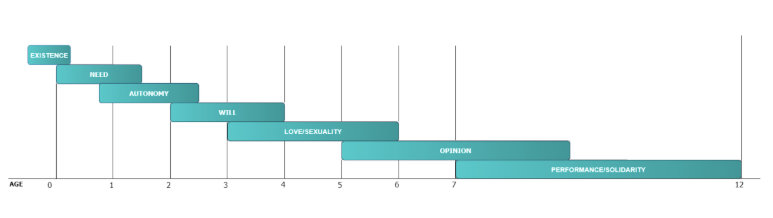
The studies focus on the development of personality structures by addressing specific needs and challenges encountered at various stages of development, such as existence, autonomy, desire, and sexuality. Bodynamic has developed a unique model of personality structures through 25 years of empirical research. This model outlines the child’s development across seven distinct stages, spanning from the second trimester in the womb to the 13th year of life.
Developmental Trauma
Developmental trauma plays a crucial role in the formation and development of various personality structures. Lisbeth Marker, the creator of the method, introduced and began using the term “developmental trauma” even before it was adopted by Bessel van der Kolk and gained widespread recognition within the international community.
Developmental trauma occurs when a child experiences significant and persistent parental failure to meet essential needs at various stages of development, which, in turn, leads to underdevelopment in key aspects of the self. In severe cases, this can result in abandonment and a loss of self.
Ego Functions
Bodynamic recognizes the ego as comprising layers of the self, ranging from the awareness of one’s own body, through the ability to assume social roles, to connection with the individual and personal preferences, ultimately reaching the capacity for self-observation and integration of all levels.
Body Types and Body Structures
A central component of the Foundation Year focuses on understanding how a child progresses through various developmental stages by developing motor skills and the voluntary use of muscles and muscle tone to respond to changing external challenges. As a result, body types and personality structures are formed, which are categorized as hypotonic or hypertonic. Each type requires a distinct therapeutic approach.
The concept of body types and structures within this method represents both a theoretical and practical evolution of ideas first introduced by Wilhelm Reich and further developed by Alexander Lowen.
For more information about body types, please visit our library ->
A compelling, practical approach to working with the body that enhances the efficiency and effectiveness of verbal psychotherapy.
Information & Registration
There are currently no upcoming courses scheduled.
A new course may open next year. Please check back for updates.